◈ What's in it
Eleven lessons and the auction training.
Each one ends in a worksheet you complete against a real parcel — one you're looking at, not a hypothetical.
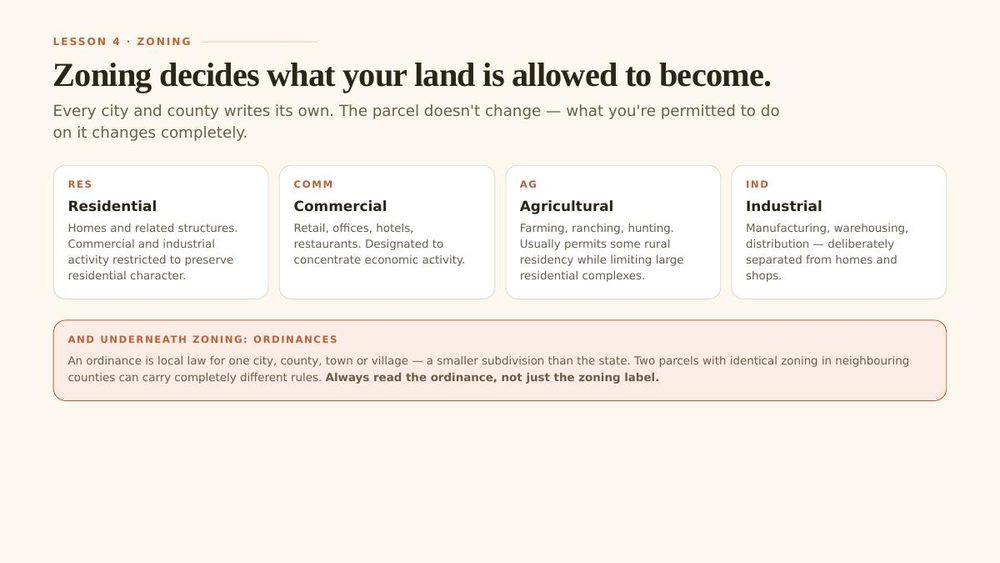
01The five land types
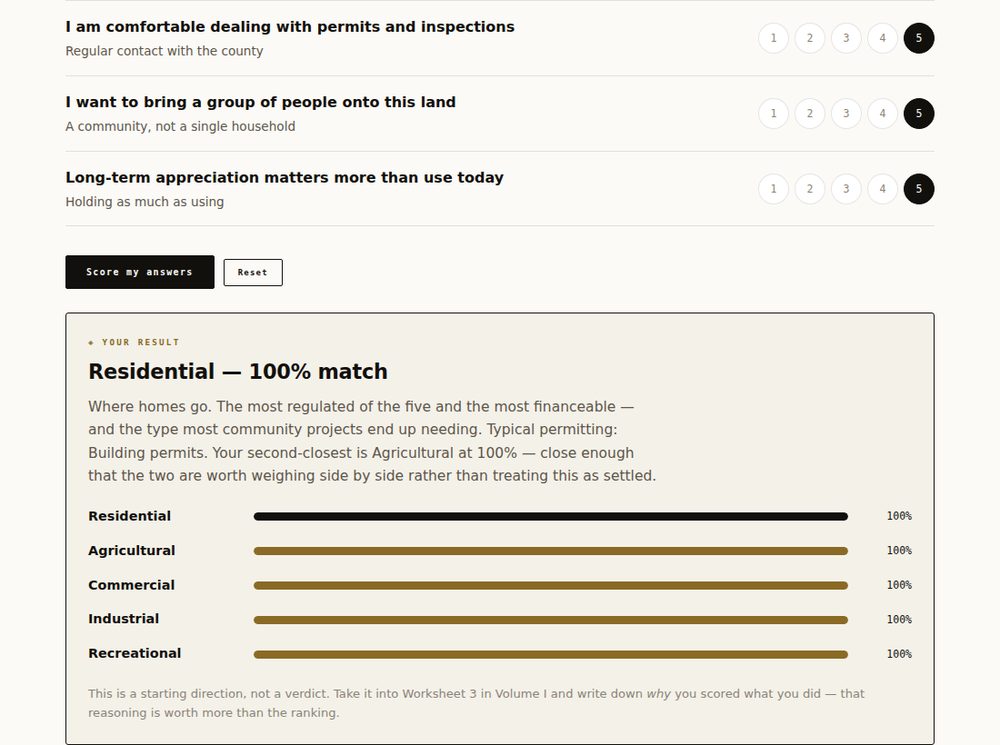
Residential, agricultural, commercial, industrial and recreational — what each can legally become, and which one actually fits what you want to build.
WorksheetLand type matcher
02Where the cheap acreage is
How to read a county, what makes land cheap for good reasons and bad ones, and the difference between remote and worthless.
County research
03Land vetting before you buy
The full due-diligence pass: access, utilities, zoning, title, easements and the things that quietly kill a deal after closing.
26-point checkerDeal killers
04Property law and rights
Fee simple, easements, and the mineral, water and air rights most buyers never check until somebody else exercises them.
Rights worksheet
05Water, wells and the questions to ask
Whether there is water, who owns it, what a well costs here, and how to find out before you own the problem.
Well logs
06Soil testing and surveying
What to order, when in the process to order it, how to read what comes back, and what a bad perc test really means.
Order-of-work
07Reading the plat and the deed
What the recorded documents actually say, and how to spot the encumbrance nobody mentioned.
Document review
08Valuing a parcel
Comparables for raw land, price per acre versus price per usable acre, and what improvements are genuinely worth.
Valuation sheet
09Negotiation and the offer
How the offer is structured, contingency periods, and the release clause almost nobody asks for and everybody needs.
Offer template
10Financing raw land
Why banks treat land differently, seller financing, owner-carry terms, and what a realistic structure looks like.
Funding comparison
11Closing without surprises
Title work, the walk-through, what to confirm the week before, and how not to drop the ball at the end.
Closing checklist